
How to Spot and Avoid Video Chat Scams: A 2026 Safety Guide
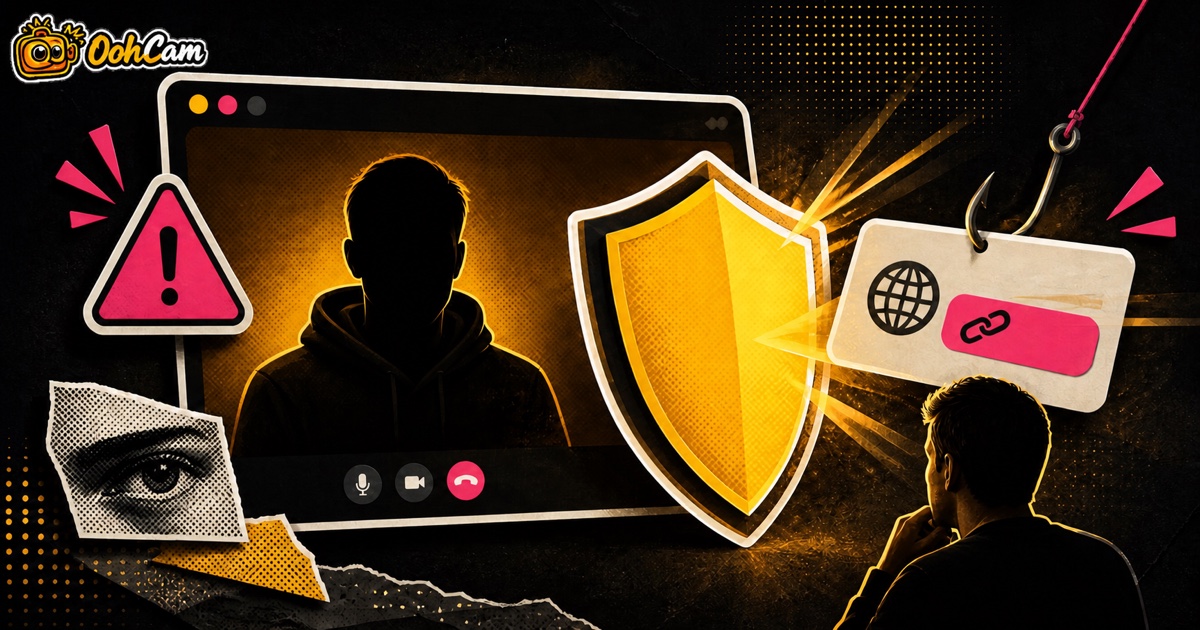
The real risk in random video chat is rarely a dangerous stranger — it is a scam. Fraudsters and bots flood open platforms hoping to trick people out of money, personal data, or private images. The good news: almost every scam follows a predictable script, so once you learn the patterns, they become easy to spot and skip. This guide breaks down the most common video chat scams of 2026, the red flags that give them away, and exactly what to do if you are ever targeted. For the broader safety checklist, pair this with our video chat safety guide.
The Most Common Scams — and How They Work
Scammers rely on emotion and urgency. They build a little trust, then create a reason you "need" to act right now. Recognising the category is half the battle:
- Romance & money scams. Someone is unusually affectionate fast, then a crisis appears — a stuck payment, a sick relative, a travel emergency — and they need money or gift cards.
- Phishing links. A "verification," "prize," or "my other profile" link that leads to a fake login page or malware. On a real video chat you never need to click a link.
- Fake & bot profiles. Accounts that never turn the camera on, reply with generic lines, or loop the same pre-recorded clip.
- "Move to another app." Pressure to switch to a messaging app within minutes — away from the platform's moderation and reporting.
- Sextortion. Someone coaxes you into sharing intimate content, then threatens to release it unless you pay. We cover this seriously below.

Red Flags to Skip on Sight
| 🚩 Red Flag | What It Usually Means |
|---|---|
| Camera never turns on | Bot or fake profile hiding its identity |
| Asks for money, crypto, or gift cards | Financial scam — no exceptions |
| Sends a link "to keep chatting" | Phishing or malware attempt |
| Pushes to move off-platform fast | Escaping moderation and reporting |
| Declares strong feelings within minutes | Classic romance-scam grooming |
| Pressures you for intimate content | Possible sextortion setup |
If you see any one of these, you do not need to investigate — just skip and report. On a good platform, moving to the next person takes a single tap.
Protect Yourself: Five Habits That Stop Most Scams
- Never send money. No genuine match asks you to pay. This one rule blocks the majority of scams outright.
- Guard your data. No full name, address, phone number, email, financial details, or ID. Keep your background free of location clues.
- Stay on the platform. Moderation and reporting only protect you where the chat lives, so decline "move to another app" requests.
- Never click links shared in chat, and never share intimate content with someone you just met.
- Use report & block. One tap removes the person and helps the platform catch repeat offenders.
These habits work everywhere, but they are easiest on a platform that lets you browse real profiles and see a live camera before you invest any time — which is the opposite of what scammers want.

If You Are Targeted — What to Do
If a scammer gets to you, stay calm and act deliberately. Do not pay and do not panic. Paying a blackmailer almost never ends the threats — it signals you will pay again.
- Stop responding and do not send money or more content.
- Block and report the account on the platform immediately.
- Save evidence — screenshots of the profile, messages, and any threats — before you block.
- Tell someone you trust, and if you are threatened or a minor is involved, contact local law enforcement or a support hotline. You are not alone, and it is not your fault.
Reporting matters beyond your own case: it trains moderation systems and protects the next person the scammer would have targeted.
Why Moderation Makes Scams Far Rarer
The best defence is a platform that shuts scams down before they reach you. OohCam is built as a safer Omegle alternative: it runs in your browser with no download, uses automated safety checks with instant report and block tools, and centres real, live video — which bots and fake profiles struggle to fake. Prefer to keep things private and one-on-one? A private 1on1cam keeps the whole conversation between just the two of you, on-platform and easy to leave.
No system removes every bad actor, but combining smart habits with a moderated platform turns scams from a real danger into a minor, skippable annoyance — so you can enjoy random video chat the way it is meant to be.

Frequently Asked Questions
What are the most common video chat scams?
The most common are romance and money scams (someone builds trust, then asks for money or gift cards), phishing links sent in chat, fake or bot profiles that never turn on the camera, and sextortion (threats to share private images unless you pay). Almost all of them follow a predictable script once you know the signs.
How can I tell if a video chat profile is a bot or fake?
Bots and fakes usually avoid turning the camera on, reply with generic or off-topic lines, push you to move to another app quickly, or send links. A real person on a live video call reacts naturally to what you say and to specific things you point out on screen. If the camera never comes on, treat it as fake.
What should I do if someone asks me for money on a video chat?
Do not send anything — no money, no crypto, no gift cards, no bank details. No genuine match will ask you to pay. Skip immediately and report the account. Requests for money are the single clearest sign of a scam, no matter how convincing the story is.
What is sextortion and how do I protect myself?
Sextortion is when someone pressures you into sharing intimate images or acts, then threatens to release them unless you pay. Protect yourself by never sharing intimate content with strangers, never paying if threatened, and blocking and reporting immediately. Keep any evidence and, if you are threatened, contact local authorities or a support hotline — paying almost never stops the threats.
Do moderated platforms reduce the risk of scams?
Platforms with active safety controls, live video, and easy report/block tools can respond to suspicious accounts and make it harder for bots to operate. Keeping conversations on the platform — instead of moving to another app — is one of the strongest protections you have.
Chat smart and stay safe — start a free, moderated video chat now.